

UK Driving Rules You Probably Don't Know About
You passed your driving test. You know the Highway Code, or at least you did when you revised for your theory test. But how much of it do you actually remember now?
The honest answer for most drivers is: not as much as they think.
The UK Highway Code is updated regularly, and a surprising number of rules that affect everyday driving are either widely misunderstood, largely forgotten, or simply never taught as clearly as they should have been. Some of them carry significant fines. Some of them could invalidate your insurance. And some of them will genuinely surprise you.
Here are the UK driving rules most people don’t know about, but probably should.
You Must Give Way to Pedestrians at Junctions
This one changed in the 2022 Highway Code update, and a significant number of UK drivers still haven’t caught up with it.
Under the updates ruels, drivers must give way to pedestrians who are waiting to cross or are already crossing a road you are turning into. Previously, pedestrians had to wait for vehicles to complete their turn. Now the priority is reversed; pedestrians come first.
This applies when you are turning left or right at a junction. If a pedestrian is waiting at the kerb or has started to cross the road you’re turning into, you must give way to them, not the other way around.
Failing to do so can result in a fixed penalty notice, points on your licence, and in the event of an accident, serious legal consequences.
Cyclists and Horse Riders Have Priority at Junctions Too
The same 2022 Highway Code update introduced a hierarchy of road users, placing pedestrians at the top, followed by cyclists and horse riders, then motorcyclists, and then car drivers.
At junctions, drivers must give way to cyclists and horse riders travelling straight ahead when the driver is turning. This is a significant change from how many drivers were taught and how many still behave on the road.
It applies in both directions, turning left and turning right. If a cyclist is approaching a junction straight ahead and you’re turning across their path, you must wait for them.
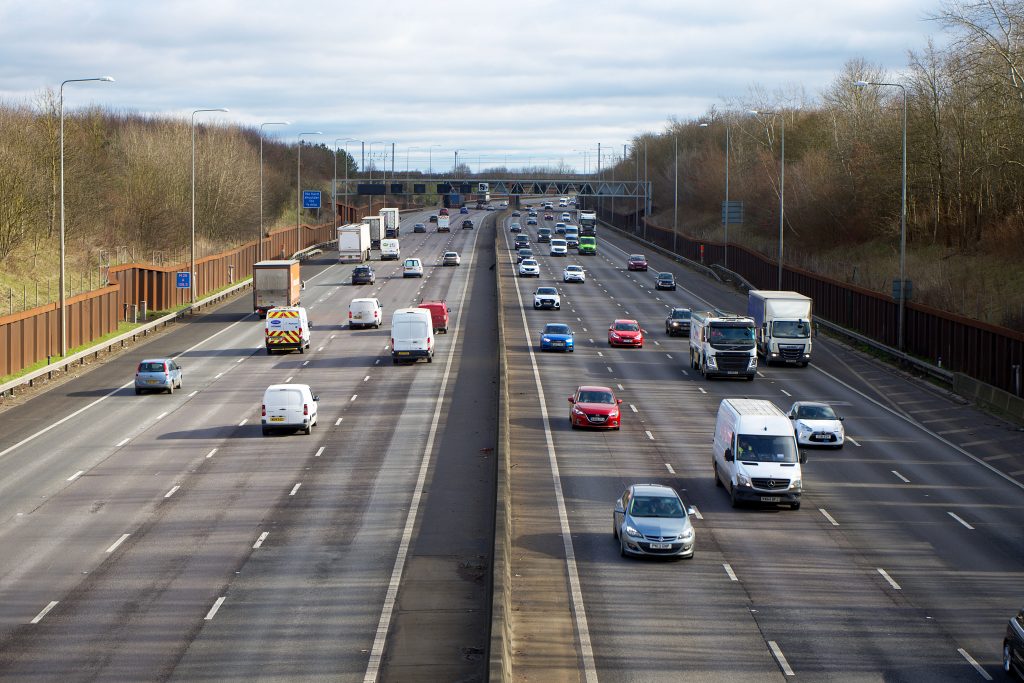
The Middle Lane Is Not Your Lane
Lane-hogging, sitting in the middle lane of a motorway when the left lane is clear, is not just poor driving etiquette. It’s an offence.
Since 2013, lane hogging has been classified as careless driving under the Road Traffic Act. Police can issue a fixed penalty of £100 and three penalty points without going to court. In more serious cases, it can result in a court summons and a larger fine.
The rule is simple: keep left unless overtaking. Once you’ve completed your overtake, return to the left lane. The middle land is for overtaking, not cruising.
Flashing Your Headlights Has Only One Legal Meaning
Many drivers use headlight flashes to signal all sorts of things: to thank someone, to warn of a speed camera ahead, to tell someone it’s safe to pull out.
None of these are legal uses of your headlights.
Under the Highway Code, flashing your headlights serves one purpose only: to let other road users know you are there. It is not a signal to proceed, not an instruction, and not a form of communication beyond alerting others to your presence.
If you flash someone to indicate it’s safe for them to pull out and they do so and have an accident, you could face legal liability. If you receive a headlight flash at a junction, treat it with caution; it is not a guaranteed signal that it’s safe to proceed.
You Cannot Use Your Phone Hands-Free to Film or Take Photos Either
Most drivers know that holding a mobile phone while driving is illegal. Fewer know that the law was strengthened significantly in 2022.
Since March 2022, it has been illegal to use a handheld mobile phone while driving for virtually any reason, including taking photos, filming, scrolling through music, or checking a map. The old defence of using a phone for non-communication purposes was closed.
The penalty is six points on your licence and a £200 fine. For new drivers, those who passed their test in the last two years, six points means an automatic licence revocation.
What’s still legal: using your phone in a cradle for navigation is permitted, but you must not touch or interact with the phone while moving. You can also use a phone in a cradle to make or receive calls via Bluetooth, but interacting with the screen while moving is not.
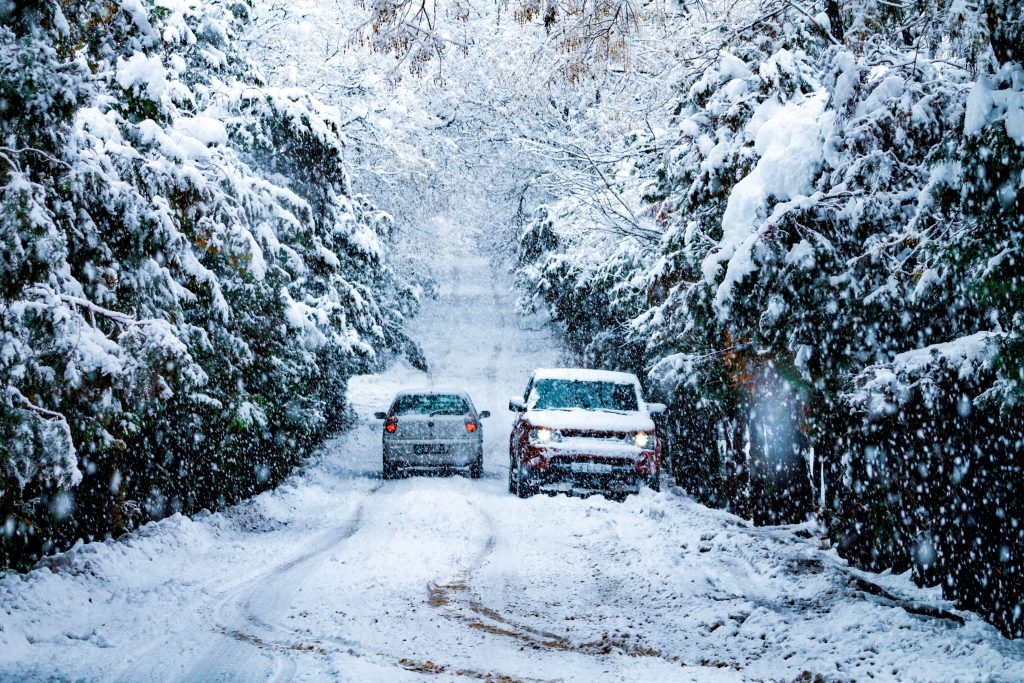
Driving With Snow on Your Roof Is an Offence
You’ve cleared your windscreen, your mirrors and your number plates. But what about the roof?
Snow or ice falling from a vehicle’s roof onto the windscreen of a following driver is classified as both a road safety hazard and potentially an unsecured load. You can be prosecuted for driving without due care na dattention is snow from your roof causes and incident, and if it causes an accident, the consequences can be significantly more serious.
The Highway Code requires that you are able to see clearly from all windows before driving. That includes ensuring the roof is clear, because the snow sitting there has to go somewhere when you brake or accelerate.
It’s Illegal to Drive in Flip Flops – Or Barefoot
There’s no specific law naming footwear in the UK driving legislation. But driving in inappropriate footwear, including flip flops, heels or no shoes at all, can constitute driving without proper control of the vehicle.
If your footwear causes you to brake less effectively, slip off a pedal, or fail to apply adequate pressure to the clutch or accelerator, you could face a charge of careless driving or dangerous driving. In the event of an accident, your insurance company may also raise the issue of footwear as a contributing factor.
The guidance is simple: wear footwear with a sole that gives adequate grip on the pedals, covers the foot securely, and doesn’t restrict ankle movement. Trainers or flat, closed shoes are the standard recommendation.
You Must stop for a School Crossing Patrol
The law requires drivers to stop when a school crossing patrol officer steps into the road, not when the lollipop is raised, but when the officer steps out.
Failing to stop for a school crossing patrol officer is a criminal offence carrying a fine of up to £1,000 and three penalty points. In practice, many drivers only stop when they see the sign raised, by which point the officer is already in the road and children may already be crossing. The legal obligation begains the moment the officer steps into the carriageway.
Parking Opposite a Junction Is Illegal
Most drivers know you can’t park too close to a junction. Fewer know that parking directly opposite a junction is also restricted, not because of distance, but because it can block sight lines and make it difficult for vehicles to turn.
The Highway Code advises against parking opposite or near a junction and in many cases double yellow lines reflect this restriction. In areas without road markings, parking a way that obstructs a junction or causes a hazard can still result in a penalty charge notice or a fixed penalty for obstruction.
You Cannot Sound Your Horn Between 11:30 pM and 7 AM in a Built-Up Area
The use of a vehicle horn is restricted by the Road Traffic Act. In a built-up area, broadly any road with streetlights, you cannot use your horn between 11:30 pm and 7 am unless there is an immediate danger.
Using your horn to say hello, to alert a friend you’ve arrived, or to express frustration in a residential area late at night is an offence. Penalty: a fixed penalty notice and a fine.
The horn’s legal purpose is to warn other road users of your presence when there’s an immediate danger, nothing else.
Leaving Your Engine Running While Stationary – Idling – is an Offence in Many Areas
Stationary idling, leaving your engine running while parked, is an offence under the Road Traffic Act in many situations. It’s most commonly enforced by local councils rather than the police, and fixed penalty notices of £20-£80 can be issued.
This includes warming your car up on a cold morning outside your house, sitting with the engine running while waiting to collect someone from school, or keeping the engine on while parked on a public road.
The rules vary slightly by local authority, but the national legislation is clear that needless idling in a public place constitutes an offence.

Driving Through a Puddle and Splashing a Pedestrian
It happens all the time: a car hits a puddle at speed and soaks someone waiting at a bus stop or walking along the pavement. It might feel like bad luck, but in many cases it’s an offence.
Driving through a puddle in a way that splashes pedestrians can be prosecuted as driving without reasonable consideration for other persons under the Road Traffic Act 1988. Fixed penalty notices start at £100, and in more serious cases, the fine can be higher.
Slowing down for puddles near pedestrians isn’t just considerate; it’s the law.
Your Passengers Must Wear Seatbelts, and It’s Your Responsibility
Most drivers know that seatbelts are compulsory. Fewer know that for adult passengers, the responsibility for wearing a seatbelt legally falls on the passenger, except in one significant situation.
For passengers under 14 years old, the legal responsibility for ensuring they are properly restrained lies with the driver, not the parent, not the child. If a child in your car is not wearing a seatbelt, you are committing the offence, not them.
Adult passengers who refuse to wear a seatbelt are committing the offence, but you, as the driver, may still face consequences in the event of an accident, particularly if your insurance or the circumstances of the accident come under scrutiny.
Driving With a Dirty Number Plate is an Offence
Your number plate must be clearly legible at all times. Driving with a number plate obscured by dirt, mud, or damage is an offence that can result in a fixed penalty notice of up to £1,000.
This is particularly relevant in winter when road spray makes it easy for number plates to become dirty quickly. Automatic Number Plate Recognition (ANPR) cameras are now widespread on UK roads. A plate that can’t be read by an ANPR camera is a plate that’s not doing its legal job.
A quick wipe of the number plate when you’re cleaning your windscreen takes seconds and could save you a fine.
You Must Report a Collision Involving an Animal
Under the Road Traffic Act 1988, if you are involved in a collision with any of the following animals, you are legally required to report it to the police:
- Dogs
- Horses
- Cattle
- Pigs
- Goats
- Sheep
- Donkey and mules
Cats are not on this list, which surprises most people. Neither are deer or other wild animals. But for the animals listed above, failing to stop and report the incident to the police is a criminal offence.
If the owner of the animal is present, you can exchange details with them instead. If no owner is present, the incident must be reported to the police as soon as reasonably practicable and in any case within 24 hours.
Driving on a Road Closed By Police is an Offence
It sounds obvious, but the number of drivers who drive around road closure signs or barriers is significant. Driving on a road that has been closed by the police, whether due to an accident, flooding, or any other reason, is an offence under the Road Traffic Act.
You can be prosecuted for failing to comply with a traffic sign or direction, which carries a fixed penalty and may result in points on your licence. In more serious cases, particularly where a road is closed due to a live incident, driving through a closure could result in much more serious consequences.
The Rules Around Parking on Pavements Are Changing
Parking on pavements is currently restricted in London, where it has been illegal since 1974, but the rules elsewhere in England, Scotland and Wales are less clear-cut. However, this is changing.
The government has been consulting on a national ban on pavement parking in England, and many local authorities already enforce against pavement parking where it causes an obstruction. Scotland introduced its own pavement parking restrictions in 2023.
Even where no specific prohibition exists, parking on a pavement in a way that causes an obstruction, forcing pedestrians, wheelchair users, or people with pushchairs into the road, can result in a penalty charge notice for obstruction.
The direction of travel is clearly towards stricter enforcement nationwide.
Leaving a Car Unlocked and Running, ‘Frost Quitting’, Invalidates Your Insurance
On a cold morning, leaving your car running on the driveway with the keys in the ignition while you wait for it to warm up might seem harmless. It isn’t.
This practice, known as frost quitting, can invalidate your car insurance. Most policies require that your vehicle is locked and secure when left unattended. An unlocked, running car with the keys inside is neither.
If your car is stolen while frost quitting, your insurer may refuse to pay out, and you could also face prosecution under the Road Traffic Act for leaving a vehicle in a dangerous condition.
Driving with Earphones or Headphones in Can Be an Offence
There is no specific law against driving with earphones in, but doing so can constitute driving without due care and attention if it affects your ability to respond to what’s happening around you, sirens, horns or other auditory warnings.
Police have the discretion to stop and issue a fixed penalty to a driver wearing earphones if they consider it to be affecting their driving. In the event of an accident, wearing earphones that reduce your awareness of your surroundings is likely to be raised by your insurer and potentially by a court.
The safest approach is to use your car’s own speakers via Bluetooth and leave the earphones for the pavement.

Most of these rules aren’t obscure technicalities; they’re straightforward laws that apply to every journey. The problem is that driving tests, however thorough, are a snapshot in time. The Highway Code evolves, and enforcement improves. And the gap between what drivers think the rules are and what they actually are quietly widens.
Refreshing your knowledge of the Highway Code periodically is always a good idea and costs nothing beyond a few minutes of reading.
At Motor Loans R Us, we help people get on the road, and we want to make sure they stay there safely. If you’re ready to finance your next vehicle, we’re ready when you are.