

Hire Purchase VS PCP (Personal Contract Purchase)
If you’re looking at vehicle finance, two of the options you’re most likely to come across are Hire Purchase (HP) and Personal Contract Purchase (PCP).
But what’s the difference between HP and PCP? How do the monthly payments compare? What happens at the end of the agreement? And perhaps most importantly, which option could suit your circumstances?
The answer depends on what you want from your finance agreement.
Both HP and PCP are ways of financing a vehicle, but they structure your repayments differently and the end of the agreement differently. PCP is technically a form of Hire Purchase, but with a larger amount of the vehicle’s vlue deferred tot hte final balloon payment. This generally means lower monthly payments than a traditional Hire Purchase agreement.
How Does Hire Purchase Finance Work?
Hire Purchase, or HP, is a straightforward way to finance a vehicle and work towards owning it outright.
You’ll typically pay a deposit (not always) followed by a series of monthly payments over an agreed term. The monthly payments cover the financed amount plus interest.
Once you’ve made all the required payments, including any applicable option to purchase fee, ownership of the vehicle passes to you.
During the agreement, the finance company remains the legal owner of the vehicle.
How Does Hire Purchase Finance Work?
A typical Hire Purchase agreement looks like this:
- Choose your vehicle
- Agree a deposit, if applicable
- Make your monthly payments for the agreed term
- Make the final payment and any applicable option-to-purchase fee
- You become the owner of the vehicle
There is generally no large balloon payment at the end of an HP agreement.
This means you know that, provided you meet the terms of the agreement and make all the required payments, you’re working towards owning the vehicle at the end.
What is Personal Contract Purchase?
Personal Contract Purchase, or PCP, is a type of vehicle finance that gives you lower monthly payments by deferring part of the vehicle’s cost until the end of the agreement.
Like HP, you’ll usually pay a deposit followed by monthly payments.
The key difference is that PCP includes a larger final payment, often referred to as a balloon payment or Guaranteed Minimum Future Value (GMVF).
This final amount is agreed at the beginning of the contract.
Because part of the vehicle’s value is deferred until the end of the agreement, the monthly payments are generally lower than they would be on HP for the same vehicle and term.
What Happens At The End Of A PCP Agreement?
This is where PCP differs most from HP.
- Keep the vehicle: Pay the final balloon payment, along with any applicable fees, and you can own the vehicle.
- Return the vehicle: Subject to your agreement’s terms, you can return the vehicle to the finance company. Mileage and condition requirements can apply, so it’s important to understand these and your personal requirements before entering the agreement.
- Change your vehicle: If you want to move into another vehicle, you may be able ot use any available equity towards another finance agreement, subject to the new agreement and lender approval.
Hire Purchase vs PCP: What's The Difference?
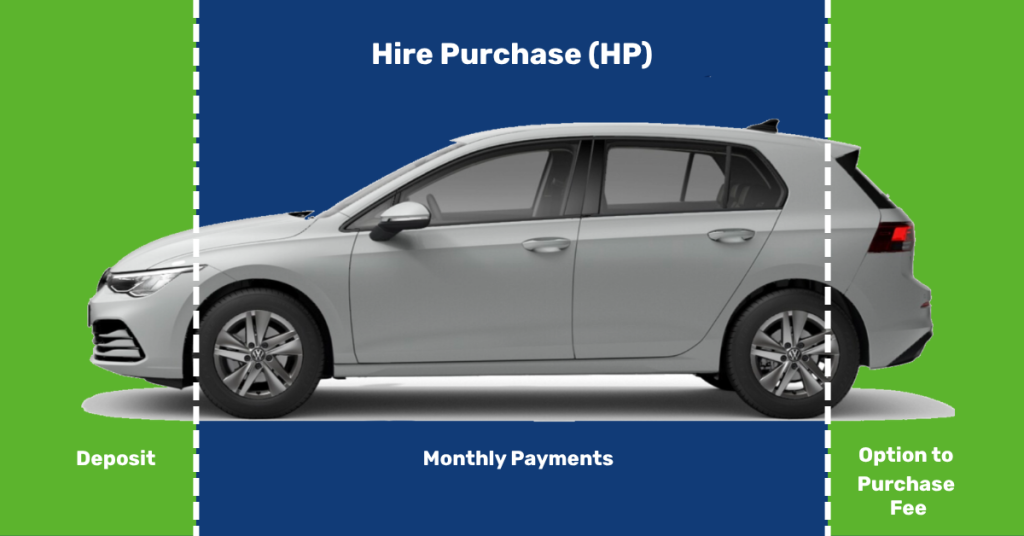
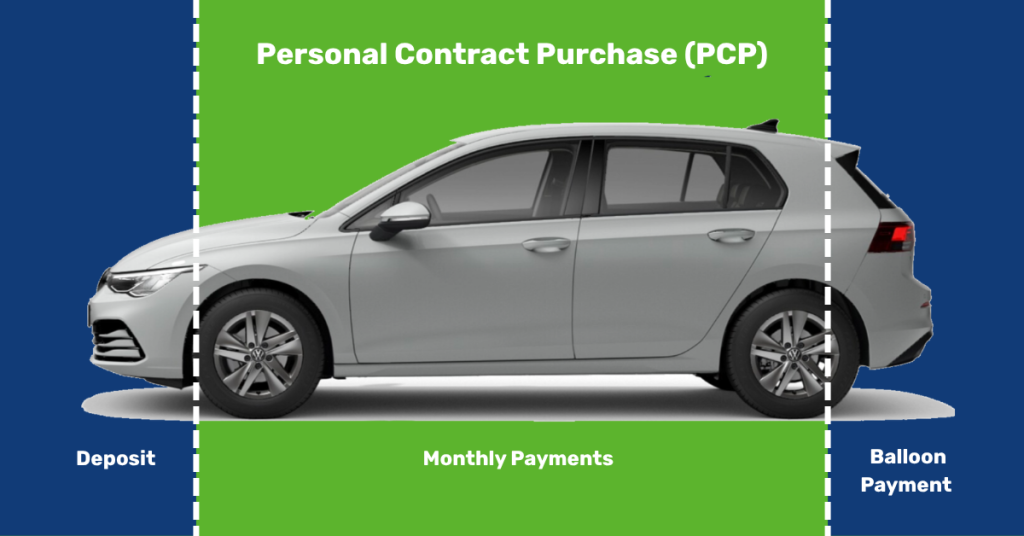
The easiest way to understand the difference is to look at what happens to the vehicle’s cost during the agreement.
Hire Purchase (HP)
Personal Contract Purchase (PCP)
The important thing is that lower monthly payments don’t necessarily mean lower overall cost. With PCP, you are deferring a larger amount until the end of the agreement, and interest is charged under the terms of the finance agreement.
PCP vs HP: which has lower monthly payments?
If you’re comparing the same vehicle and broadly similar terms, PCP will generally have a lower monthly payment than HP because a large amount is deferred to the end of the agreement.
With HP, you’re financing the vehicle’s cost over the agreed term, so the monthly payments generally need to cover more of the balance.
With PCP, the final balloon payment reduces the amount being paid through the regular monthly instalments.
That can make PCP attractive if keeping your monthly budget lower is a priority.
However, it’s important to look beyond the monthly payment and consider the deposit, term, APR, total amount payable, and final balloon payment before deciding which agreement fits your circumstances.
Which is better: HP or PCP?
There isn’t one answer that applies to everyone. It comes down to what you want from your vehicle finance.
HP could suit you if:
You want to own the vehicle at the end: If your intention is to keep the vehicle long-term and you don’t want to deal with a large final balloon payment, HP may be worth considering. It can also be an attractive option if you don’t want the mileage considerations that commonly form part of a PCP agreement.
PCP could suit you if:
You want lower monthly payments and flexibility at the end of the agreement. PCP gives you the option to decide what to do when the agreement ends: pay the balloon and keep the vehicle, return it subject to the agreement conditions, or potentially move into another vehicle. However, it’s important to understand that returning a PCP vehicle can involve condition and mileage requirements.
What about mileage on PCP?
Mileage is an important consideration when comparing PCP and HP. With PCP, you’ll normally agree on an expected annual mileage when you take out the finance. This helps the lender calculate the vehicle’s expected value at the end of the agreement and therefore the final balloon payment. If you return the vehicle at the end of the PCP, going over the agreed mileage can result in excess mileage charges under the terms of the agreement. Damage beyond fair wear and tear can also result in additional charges. If you know you’re likely to cover a high number of miles, make sure you take that into account before choosing your finance structure.
What happens if you want to keep the car at the end of a PCP?
You can choose to keep the vehicle. You’ll need to pay the final balloon payment specified in your agreement, along with any applicable fees. If you don’t have the money available to make the payment outright, refinancing the balloon payment may be an option, subject to your circumstances and lender approval. This would involve taking out new finance to settle the existing agreement and then making repayments under the new agreement. It’s important to look at the new agreement on its own merits, including its interest rate, term and total amount payable.
Can you end HP or PCP early?
Both HP and PCP agreements can have options for early settlements or ending the agreement, but the rules and financial consequences depend on your circumstances and the terms of the agreement. IF you’re considering ending an agreement early, don’t simply stop making payments. Your first step should be to speak to your finance provider and request the relevant information, such as a settlement figure, so you understand your options. Some customers may also have statutory rights around voluntary termination, depending on the agreement and how much has been paid. These rules are specific, so it’s important to understand how they apply to your individual agreement rather than assuming they will apply in every situation.
HP vs PCP: what should you consider?
Before choosing between Hire Purchase and PCP, think about more than just the monthly payment. Ask yourself:
Do I want to own the vehicle? – If the answer is yes, consider how you’ll reach ownership under each agreement. With HP, ownership comes after the required payments and applicable final fee. With PCP, you’ll need to pay the balloon to own the vehicle.
What monthly payment fits my budget? – PCP can offer lower monthly payments because part of the vehicle’s cost is deferred. But don’t choose finance based purely on the lowest monthly figure. Look at the full agreement and make sure the overall commitment is affordable.
How many miles do I drive? – If you choose PCP, think carefully about your expected annual mileage. Underestimating your mileage could result in excess mileage charges if you return the vehicle at the end of the agreement.
How long do I want to keep the vehicle? – If you’re someone who likes changing vehicles every few years, PCP may offer useful flexibility at the end of the agreement. If you tend to keep your vehicles for many years, HP may be worth considering because you’re working towards full ownership through the regular payments.
What can I afford overall? – Compare the total amount payable, not just the monthly payment. Interest, deposit, fees, term length and any final payment can all affect the overall cost of your finance.
Hire Purchase vs PCP: the simple version
Still confused? Think of it like this:
Hire Purchase = you pay towards owning the vehicle. You make your payments over the agreed term, and once you’ve completed the agreement and paid any applicable final fee, the vehicle becomes yours.
PCP = pay lower monthly payments and decide what you want to do at the end. You make your monthly payments, with a larger final payment deferred until the end. You can then decide whether to pay the balloon and keep the vehicle, return it subject to the agreement’s conditions, or potentially move into another vehicle.
Neither structure is automatically right for everyone.
The right option depends on your vehicle, budget, mileage, circumstances and what you want to do with the car at the end of the agreement.
Ready to explore your options?
Whether you're looking for Hire Purchase, Personal Contract Purchase or another type of vehicle finance, we can connect you with lenders to explore your vehicle finance options based on your circumstances.
You can start by completing our online application. It's quick and straightforward, and a soft search can be used to assess your application without affecting your credit score.
Apply Now