

The Rules of Electric Car Charging
Electric cars are simpler to run than most people expect. No oil change, no exhaust emissions, no trips to a petrol station. Just plug in, charge up and go.
But charging an electric car isn’t quite as straightforward as filling up with petrol, and there are rules, etiquette, legal requirements, and practical considerations that every EV owner needs to understand. Some of them are formal regulations. Some of them are unwritten rules that the EV community takes seriously. And some of them are simply things nobody tells you until you’ve already made the mistake.
This guide covers all of them.
The Basics: How EV Charging Actually Works
Before getting into the rules, it’s worth being clear on how charging works, because understanding the different types of charging is the foundation for everything else.
Charging Speeds
Slow Charging (3kW)
The slowest form of charging, typically from a standard three-pin domestic socket using a Mode 2 cable. Adds roughly 8-10 miles of range per hour. Suitable as a genuine backup option but not practical as a primary charging method for most drivers. A full charge from empty can take 24 hours or more.
Fast Charging (7kW-22kW)
The standard for home wallbox chargers and many public destination chargers, in car parks, supermarkets, hotels and workplaces. A 7kW wallbox adds roughly 25-30 miles per hour, meaning most EVs will charge from near-empty to full overnight. A 22kW charger, less common for home use but available at some public locations, charges approximately three times faster.
Rapid Charging (50kW)
Found at dedicated public charging hubs, motorway service areas, and some retail locations. Adds roughly 100 miles in 20-40 minutes, depending on the vehicle. Uses DC (direct current) rather than AC, which charges the battery more quickly but also generates more heat.
Ultra-rapid Charging (100kW-350kW+)
The fastest public charging available in the UK, found at premium charging networks like Gridserv, Pod Point, and Tesla Superchargers. Some vehicles can charge from 10% to 80% in as little as 15-20 minutes at the highest speeds. Not all EVs support ultra-rapid charging; check your vehicle’s maximum charge rate before assuming.
Connector Types
Type 2- the standard AC connector for most modern EV’s in the UK and Europe. Used for slow, fast, and some rapid charging.
CCS (Combined Charging System) – the standard DC connector for rapid and ultra-rapid charging on most modern EVs. Combines the Type 2 AC connector with two additional DC pins below it.
CHAdeMO – an older DC rapid charging standard used by some Japanese vehicles, including older Nissan Leafs. Becoming less common as CCS becomes the dominant standard.
Telsa proprietary connector – Tesla vehicles use their own connector type at Supercharger networks, though newer Tesla models and many Supercharger sites now support CCS too.
The Legal Rules of EV Charging
Rule 1: You Must Not Use an Extension Lead to Charge Your EV
Using a domestic extension lead to charge an electric vehicle is not just inadvisable; it is specifically warned against by vehicle manufacturers, charge point manufacturers, and electrical safety bodies, and doing so can void your vehicle warranty and home insurance.
Extension leads are not designed to carry the sustained high current draw of EV charging. The risk of overheating, fire and electrical damage is significant. The only safe method of domestic charging is directly from a wall socket using the manufacturer-supplied Mode 2 cable, or from a dedicated home wallbox installed by a qualified electrician.
Rule 2: Home Wallbox Installations Must Be Carried Out by a Qualified Electrician
Installing a home EV charger is notifiable electrical work under Part P of the Building Regulations in England and Wales. This means it must be carried out by a qualified electrician who is registered with a competent person scheme, such as NICEIC, NAPIT, or OZEV-approved installers
A wallbox installed by an unqualified person is not only potentially dangerous, but it could also invalidate your home insurance, void your vehicle warranty, and create problems if you come to sell your property.
Always use an OZEV-approved installer. The government’s EV chargepoint grant, which currently offers up to £350 off the cost of a home charger for eligible properties, also requires installation by an approved installer.
Rule 3: Public Charge Points Must Display Clear Pricing
Since November 2023, operators of public charge points with 50kW or above capacity in the UK are legally required to display pricing clearly, including a simple pence-per-kWh price, before a driver begins charging. This regulation was introduced to make public charging costs more transparent and comparable.
Slower public chargers are not yet subject to the same mandatory pricing display requirements, though the direction of travel is clearly toward greater price transparency across all public charge points.
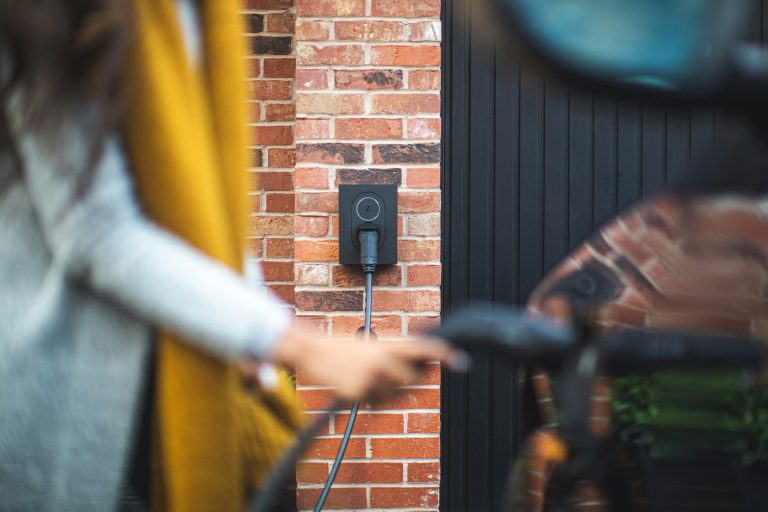
Rule 4: Public Charge Points of 50kW and Above Must Accept Contactless Payment
Since November 2023, rapid public chargers of 50 kW and above must accept contactless bank card payment, meaning drivers are no longer required to have an app or membership to use them.
This was a significant change that addressed one of the biggest practical frustrations of public charging, being unable to use a charger because you didn’t have the right app downloaded or weren’t a member of that particular network.
Slower public chargers are still permitted to operate on an app or membership basis only, though many networks have voluntarily extended contactless payment to their slower units too.
Rule 5: You Cannot Park in an EV Charging Bay Without Charging
In many locations, particularly supermarkets, retail parks, and car parks, EV charging bays are designed specifically for vehicles that are actively charging. Parking in a charging bay without plugging in or leaving a fully charged vehicle in a charging bay to keep it occupied is considered misuse of the bay.
Enforcement varies by location. On private land, which most retail and supermarket car parks are, the landowner or parking management company can issue a parking charge notice. Some local authority charging bays on public roads are subject to civil parking enforcement, meaning penalty charge notices can be issued.
The rule is simple: charging bays are for charging. If you’re not plugged in, you shouldn’t be in the bay.
The Unwritten Rules of EV Charging
Beyond the legal requirements, there’s a set of widely understood etiquette rules in the EV community that every driver should know.
Etiquette Rule 1: Don’t Leave Your Car on a Charger When It’s Full
This is the cardinal rule of public EV charging, nd the one most likely to cause friction with other EV drivers if broken.
Once your car has reached its charge target, typically 80% for most drivers at a rapid charger, move it. Leaving a fully charged vehicle occupying a rapid charger while another driver is waiting is considered seriously bad etiquette, and at some charging hubs can result in an idle fee being charged by the network.
Many rapid charging networks now apply idle fees, typically around 50p-£1 per minute, once a vehicle has finished charging and remains connected. These fees exist specifically to encourage turnover and discourage cras from being left on charge indefinitely.
Practical tip: Most EVs allow you to set a charge limit and a departure time. Set these before you leave the car, and if the charger is busy, set your limit to 80% rather than 100%.
Etiquette Rule 2: Charge to 80% at Rapid Chargers, Not 100%
Related to the above, at rapid public chargers, the accepted norm is to charge to around 80% and then move on. Beyond 80%, most EVs deliberately slow their charging rate to protect the battery, meaning the final 20% takes disproportionately longer relative to the energy added.
Charging at 80% at a rapid charger, moving on, and topping up elsewhere, or at home, is the most efficient and courteous approach. Charging from 10% to 80% might take 205 minutes. Charging from 80% to 100% at the same charger might take another 35-40 minutes for a fraction of the range.
Etiquette Rule 3: Don’t Unplug Someone Else’s Vehicle
Unplugging another driver’s vehicle, even if it appears to be fully charged, is not acceptable and in some cases may be illegal, particularly if the driver has paid for a charging session that is still active.
If a charger is occupied by a vehicle that appears to be finished charging, the correct approach is to contact the charging network helpline, the number displayed on every public charger, and ask them to manage the situation. Some networks have systems that allow the next driver to remotely notify the current driver that they’re waiting.
Etiquette Rule 4: Leave the Cable Tidy
When you finish charging at a public charge point, replace the cable in its holster or hang it neatly as you found it. A cable left trailing on the ground is a trip hazard, can be damaged by vehicles driving over it, and is inconsiderate to the next driver.
For tethered chargers, where the cable is permanently attached to the unit, this means replacing the connector in its holder. For untethered chargers, where you bring your own cable, this means unplugging both ends and storing your cable properly before leaving.
Etiquette Rule 5: If a Bay Is Broken, Report
Public charging infrastructure is still developing, and faults do occur. If you arrive at a charger and find it out of service, it costs nothing to report the fault to the network; the number is on the unit. You might save the next driver a wasted journey, and the networks can only fix faults they know about.
Most charging networks also have apps and websites where out-of-service chargers are flagged in real time; checking these before you travel to a charge point is always a good habit.
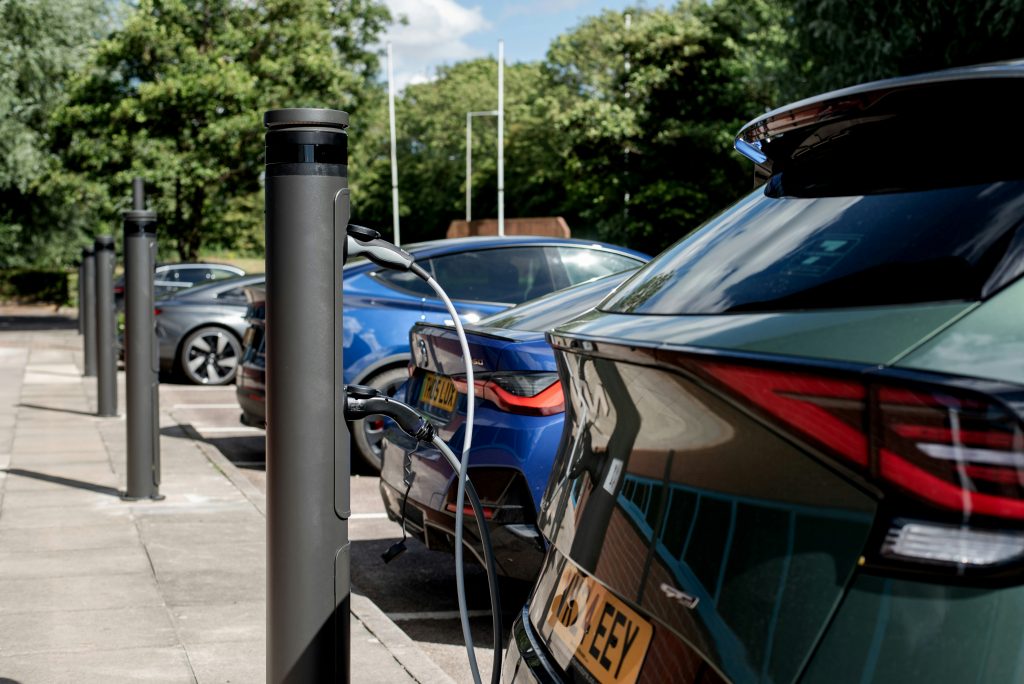
The Battery Rules: How to Charge for Long-Term Health
Beyond the legal and social rules, there is a set of best practices around how you charge that directly affect the long-term health and capacity of your battery.
Don’t Regularly Charge to 100%
Most EV manufacturers recommend keeping the battery between 20% and 80% for everyday charging. Regularly charging to 100%, and particularly leaving the battery at 100% for extended periods, accelerated the degradation of the battery chemistry over time.
Most EVs allow you to set the limit in the vehicle settings or app. Set this to 80% for everyday use, and reserve 100% charges for days when you genuinely need the maximum range.
Don’t Regularly Deplete to Near Zero
Similarly, regularly running the battery down to a very low state of charge stressed the battery chemistry. Aim to plug in when you reach around 20% rather than leaving it until the last mile.
The analogy most battery specialists use is this: think of your battery like a muscle. Occasional extreme use is fine; your battery is designed to handle it. But consistently pushing to the extremes in both directions every day causes wear that adds up over time.
Avoid Regular Rapid Charging If You Can
Rapid and ultra-rapid charging is harder on the battery than slower AC charging, partly because of the heat generated and partly because of the speed at which lithium ions move through the battery chemistry under high-current conditions.
This doesn’t mean you should avoid rapid charging, its and essential part of long-distance EV travel. But if your daily charging needs can be met by a home wallbox or a slow destination charger, using those as your primary charging method and reserving rapid charging for longer journeys is better for long-term battery health.
Precondition Your Battery in Cold Weather
Cold temperatures reduce battery performance, both in terms of range and charging speed. Most modern EVs have a pre-conditioning function that brings the battery up to its optimal operating temperature before you drive or charge.
If you’re planning a rapid charging stop on a winter journey, using your car’s navigation to route to a charge point allows many EVs to automatically pre-condition the battery en route, meaning the charger can deliver its full speed when you arrive, rather than being limited by a cold battery.
Home Charging: The Practical Rules
Get a Dedicated Wallbox – Don’t Rely on a Three-Pin Socket
A standard domestic three-pin socket charges at around 2.3kW, slow enough that overnight charging from empty might not give you a full battery by morning, depending on your vehicle. A 7kW wallbox charges roughly three times faster and is the standard recommendation for any EV owner with off-street parking.
The government’s EV Chargepoint Grant currently offers up to £350 towards the cost of a home wallbox for eligible homeowners and renters with off-street parking. Installation must be carried out by an OZEV-approved installer to qualify.
Charge at Off-Peak Times If You’re on a Smart Tariff
If you’re on an electricity tariff with off-peak rates, charging overnight during off-peak hours can reduce your charging cost significantly. Off peak electricity rates for EV drivers can be as low as 7-10p per kWh, compared to standard daytime rates of 25-30p per kWh.
Most EVs and home wallboxes allow you to schedule charging to start automatically at a set time, so you can plug in when you get home and let the car charge itself overnight at the cheapest rates.
Notify Your Insurer
Adding a home EV charger to your property may need to be disclosed to your home insurers. Some insurers treat it as a home improvement that affects the rebuild value or risk profile of the property. Check with your insurer before installation and again once fitted.
Public Charging: The Practical Rules
Plan Your Charging Stops Before You Travel
Range anxiety is most often caused by poor planning rather than genuine range limitations. Before any long journey, identify charging stops along your route using charging apps or your car’s built-in navigation, which on most modern EVs will automatically route charging stops based on your current charge level and destination.
Plan to arrive at a charger with at least 10-15% charge remaining. Attempting to arrive on the absolute minimum risks arriving below the threshold if your journey takes slightly longer than expected.
Check the Charger Status Before You Arrive
Not all public chargers are operational at any given time. Most charging network apps show real-time availability and fault status for charge points. Checking before you set off, particularly for essential stops on longer journeys, avoids arriving at a charge point that is out of service.
Have a Backup Plan
On long journeys, identify a backup charging location within a comfortable range of your planned stop. If your primary charger is occupied, out of service, or incompatible with your vehicle, knowing your nearest alternative means you’re never stuck.
Set Up Your Charging Accounts in Advance
While contactless payments are now mandatory at rapid chargers of 50kW and above, having accounts set up with the major charging networks gives you faster access and sometimes better pricing. Set these up before you need them rather than in a car park in the rain.